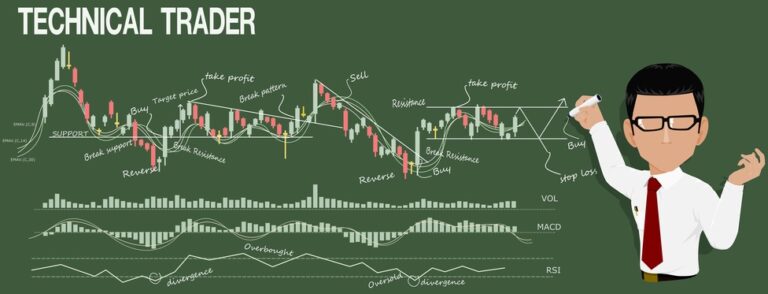
Scalping in forex trading is a strategy that involves executing a high volume of trades within a short time frame, aiming to capture small profits from minor price changes. Scalpers, the traders who employ this strategy, operate under the premise that smaller moves are easier to obtain and more frequent than larger ones. Due to the quick nature of scalping, it requires a thorough understanding of market conditions, an efficient trading platform, and the discipline to make a large number of trades per day.
To effectively employ scalping, traders need access to real-time market data, technical analysis tools, and a trading platform that allows for rapid execution of trades with minimal slippage. The approach focuses on liquidity and volatility, as these conditions are conducive to the rapid opening and closing of trading positions. Scalping is a demanding trading style that necessitates constant attention, strict exit strategies, and impeccable risk management to avoid significant losses.
Key Takeaways
- Scalping aims for small, frequent profits with brief holding times.
- Requires real-time data, quick execution platforms, and technical analysis tools.
- Demands constant monitoring and strong discipline to manage risks.
Definition of Scalping Strategy
Scalping in Forex is a day trading strategy whereby traders aim to achieve quick profits from small price changes in currency pairs. This method involves a high volume of trades with each one typically lasting only a few seconds to minutes.
Key Characteristics of Scalping:
- Short Holding Times: Positions are held for a very brief period, often just long enough to capture an advantageous move in the currency pair’s price.
- High Frequency: It entails executing a large number of trades in a single day, capitalizing on small price movements.
- Technical Analysis Reliance: Scalpers rely heavily on technical analysis tools such as candlestick charts, moving averages, and MACD (Moving Average Convergence Divergence) indicators to make informed trading decisions.
| Technical Tools | Purpose in Scalping |
|---|---|
| Candlestick Charts | Recognize patterns and potential market direction changes |
| Bollinger Bands | Provide insight on market volatility and price levels |
| Stochastic Signals | Signal potential entry or exit points based on momentum |
Traders who use scalping must possess the ability to act swiftly, as the Forex market is known for its rapid changes, requiring instantaneous decision-making and execution. Additionally, scalpers often utilize leverage to magnify their profits on these small price movements; however, this also increases the risks.
It is important to note that due to the strategy’s fast-paced nature, scalping is not suitable for everyone. It demands intense focus, discipline, and a solid understanding of market mechanics.
Key Characteristics of Scalping
Scalping is a trading approach where a trader seeks to take advantage of small price gaps in the forex market. This method is distinct for its rapid trade execution and the use of precise strategies to accrue incremental profits.
Short-Term Trading
In scalping, positions are held for a very short duration, often just minutes, and rarely more than an hour. This approach captures swift movements in currency prices that can occur during a trading session.
High Frequency
Scalpers engage in high-frequency trading, initiating a large volume of trades daily. They aim to exploit the slightest price changes and need a steadfast focus on the markets throughout their trading hours.
Small Profit Margins
Each trade aims for small profit margins, typically a few pips. Given the small return per trade, scalping relies on the aggregate of gains from the multitude of trades to be profitable.
Required Tools and Indicators
In scalping, efficiency and precision are critical. Scalpers require real-time charts, specific technical indicators, and robust trade execution software to navigate the fast-paced Forex market effectively.
Real-Time Charts
Real-time charts are imperative for scalpers, as they track price movements by the second. These charts provide a visual representation of the market conditions and are essential for making immediate trading decisions based on minute-to-minute price changes.
- Tick Charts: Display every price change and offer granulated detail
- Candlestick Charts: Offer visual patterns that can indicate potential price movements
Technical Indicators
Scalpers utilize a range of technical indicators to identify entry and exit points quickly. Key indicators for a scalping strategy typically involve those that respond swiftly to price changes.
- Moving Averages (5, 8, 13 periods): Indicate trend direction and momentum.
- Parabolic SAR: Suggests potential reversals in price direction.
- Bollinger Bands: Provide insights into market volatility and price levels.
- Stochastic Oscillator: Assesses the momentum of a trend.
- Relative Strength Index (RSI): Rates the recent price changes to evaluate overbought or oversold conditions.
Trade Execution Software
Timely trade execution is crucial in scalping. Trade execution software needs to be reliable and fast to handle the frequency of trades.
- Direct Market Access (DMA): Allows for direct trades with the exchange, bypassing intermediaries.
- High Execution Speed: Reduces slippage by carrying out trades at the desired price points.
- Automated Trading: Executes pre-set orders based on the scalping strategy, ensuring discipline and speed.
Scalping Techniques
In the realm of Forex scalping, traders utilize a variety of techniques to capitalize on small price gaps and trends over brief periods. These strategies demand a solid understanding of market indicators and swift decision-making.
Bid-Ask Spread Exploitation
Traders using this scalping technique focus on the bid-ask spread—the difference between the buying and selling prices of currency pairs. They typically execute trades when the spread narrows, indicating a tighter market price, and seek to profit from the quick sale of currencies bought at the ask price and sold at the bid price. Key tools include Level 2 quotations and direct access trading platforms that exhibit the required real-time data to make informed decisions swiftly.
Trend Scalping
Also known as following the market momentum, trend scalping involves identifying and following the market’s direction. Scalpers look for strong trends and enter trades in the trend’s direction using indicators such as moving averagesand stochastic oscillators. These indicators help traders to spot trend continuations, making it feasible to capture a series of small gains as the price moves.
- Entry: When a short-term moving average crosses above a longer-term one.
- Exit: Upon receiving counter-trend signals from indicators.
Counter-Trend Scalping
In contrast to trend scalping, counter-trend scalping is based on the belief that prices will revert after a quick spike. Traders seek to identify overbought and oversold market conditions using oscillators like the Relative Strength Index (RSI) or Bollinger Bands. The approach revolves around entering trades against the prevailing trend with the expectation that prices will bounce back to more typical ranges.
- Overbought Condition: RSI above 70, indicating a potential sell.
- Oversold Condition: RSI below 30, suggesting a potential buy.
Risk Management in Scalping
In the high-stakes arena of forex scalping, meticulous risk management is the linchpin of sustainability and success. Traders employ various techniques to mitigate potential losses while aiming to capitalize on numerous small, short-term price fluctuations.
Stop-Loss Orders
Stop-loss orders are a critical component in a scalper’s toolkit, serving as a defensive mechanism against excessive losses. They execute an automatic sell-off when the currency price hits a predefined level, ensuring that a trader can limit their potential downside without needing to constantly monitor the market.
- Type — Market or limit
- Placement — Typically a few pips below the entry point for a long position or above for a short position
- Purpose — To automatically close positions and prevent large losses
Risk-Reward Ratios
A scalper’s risk-reward ratio is typically low, reflecting the strategy’s focus on small gains. Effective scalpers often look for ratios where the potential profit justifies the risk taken, though the exact ratio may vary based on personal strategy and market conditions.
- Common Ratios — 1:1, 2:1
- Risk Management — May take several profitable trades to recover from a loss, hence the importance of a favorable ratio
Scalping Rules and Discipline
Scalping requires a strict adherence to rules and discipline to be effective. This means setting clear guidelines on entry and exit points, the number of trades per session, and total loss limits. Scalpers must stick to their strategies clinically, without letting emotions drive their decisions.
- Decisive Entry/Exit — Ensuring accurate timing for trade execution
- Session Limits — Determining in advance the maximum number of trades
- Loss Thresholds — Establishing maximum acceptable losses before halting trading activity
Advantages and Disadvantages of Scalping
Scalping is a Forex trading strategy that focuses on making small profits from short-term trades, repeatedly throughout a trading session. Its efficacy is subject to debate, often characterized by contrasting benefits and drawbacks.
Potential for Quick Profits
- Quick Gains: Scalpers can capitalize on small price movements, often aiming for profits ranging from 0.3% to 1% per trade.
- Frequent Opportunities: Given the vast number of trades, scalpers have numerous chances to profit each day.
High Transaction Costs
- Increased Costs: Engaging in numerous trades can lead to significant commission and spread expenses.
- Balance Requirement: Traders must maintain a substantial balance to offset transaction costs and to execute sizeable trade volumes.
Intense Time Commitment
- Active Monitoring: Scalping demands constant market evaluation, meaning traders need to dedicate substantial time.
- Stressful: The strategy is labor-intensive and can be stressful due to the need for rapid decision-making over the course of long hours.
Legality and Regulation
Forex scalping is a trading strategy where traders enter and exit the market quickly to capitalize on small price movements. Its legality is not in question; scalping is legal. However, traders must be mindful of the rules set by their chosen brokers and the relevant regulatory bodies.
Broker Policies:
- Allowance: Some brokers permit scalping while others do not.
- Restrictions: Brokers who allow scalping may have specific conditions or requirements.
- Account Types: Certain types of accounts might have more lenient rules regarding scalping.
Regulatory bodies impose rules to ensure fair trading practices. Scalping can be subject to scrutiny if it involves practices like:
- Prohibited Software: Utilization of automated bots or platforms against the broker’s policy.
- Price Manipulation: Any form of price interference to gain an unfair advantage.
Traders should be diligent in understanding their broker’s policies and any applicable regulations. They should also ensure that their scalping strategies align with legal frameworks to avoid account suspension or other penalties.
| Criteria | Detail |
|---|---|
| Legality | Scalping is legal. |
| Broker Policy | Must be verified, as it varies. |
| Regulatory Eye | Practices must not involve illegal software or manipulation. |
In summary, legality and regulation of forex scalping hinge on broker policies and adherence to fair trading practices as determined by regulators.
Comparison With Other Trading Strategies
In the realm of forex, scalping is distinct due to its high-speed trade execution and brief holding periods. Comparatively, other strategies involve longer hold times and a focus on larger market movements.
Day Trading
Day trading, like scalping, involves the purchase and sale of currencies within a single trading day. However, day traders tend to execute fewer trades per day and may seek larger profits per trade. They may hold positions for minutes to hours, longer than the typical scalper.
Swing Trading
Swing trading spans a longer horizon than day trading or scalping, with traders holding positions for several days or even weeks. Swing traders focus on capturing gains from short-term trends and typically employ technical and fundamental analysis to identify these opportunities.
Position Trading
Position trading contrasts sharply with scalping, as it involves holding trades for months to years. Position traders look for long-term trends, and because of the extended time frame, they rely heavily on macroeconomic factors and market fundamentals to make trading decisions.
Tips for Successful Scalping
Successful scalping in the forex market requires speed, discipline, and an efficient approach to market analysis. Traders must have a robust strategy and adhere to it meticulously to capitalize on small price movements.
Continuous Market Analysis
Traders should perform continuous market analysis, closely monitoring currency pairs for volatility and liquidity which are conducive to scalping opportunities. Using technical indicators and chart patterns helps identify entry and exit points. Real-time news feeds are also crucial, as forex scalpers must be aware of events that could cause sudden market movements.
Choosing the Right Broker
Selecting the right broker is pivotal for scalping. Ideally, the broker should offer:
- A low spread: Minimizing transaction costs is vital since scalpers aim for small profits.
- Fast execution: Speed of trade execution can mean the difference between profit and loss.
- Scalper-friendly policies: Some brokers discourage scalping. Ensure your broker allows it.
Consistent Strategy Application
For effective scalping, traders must apply their strategy consistently. A clear set of criteria for opening and closing trades reduces the risk and removes emotional decision-making. For example, a scalper may decide to:
- Enter a trade when a certain indicator alignment occurs.
- Exit at a small, predefined profit point.
- Implement a strict stop-loss to minimize potential losses.
Conclusion
Scalping strategy in Forex trading is a method focused on earning small profits from short-term trades. It relies on technical analysis and quick reaction to market movements.
- Time Sensitivity: Traders employing scalping must act swiftly, often entering and exiting trades within minutes or even seconds.
- Profit Targets: The profit margins on each trade are typically small; hence, a large number of trades are necessary to accumulate significant gains.
- Risk Management: Effective scalping strategies necessitate strict risk management to minimize potential losses that could offset the small profits made on successful trades.
- Broker Considerations: It’s essential for scalpers to engage with brokers that offer low spreads and fast execution to enhance the viability of their trading strategy.
A trader considering this approach must be disciplined, able to work within a high-pressure environment, and have the ability to make decisions rapidly. The success of scalping does not hinge on large market movements; instead, it capitalizes on the frequency of trades and the small movements that occur throughout a trading day.